BEING-IN-THE-WATER
supervisors/ Susan Schuppli, Wood Roberdeau
institution/ Centre for Research Architecture, Goldsmiths, University of London
2024
exhibition/ Reverberation Group Show, St. James Hatcham Gallery
Being-in-the-Water explores ports as spaces where logistics, labour, ecology, and more-than-human life intersect. Through fieldwork, archival research, mapping, and sound recording, the project investigates moments when ships stop moving—revealing suspension as a political and ecological condition. Focusing on maritime commons, the research asks who has the power to suspend movement, how damaged waters continue to shape human and more-than-human relations, and what it means to inhabit aquatic environments marked by extraction, pollution, and resistance.
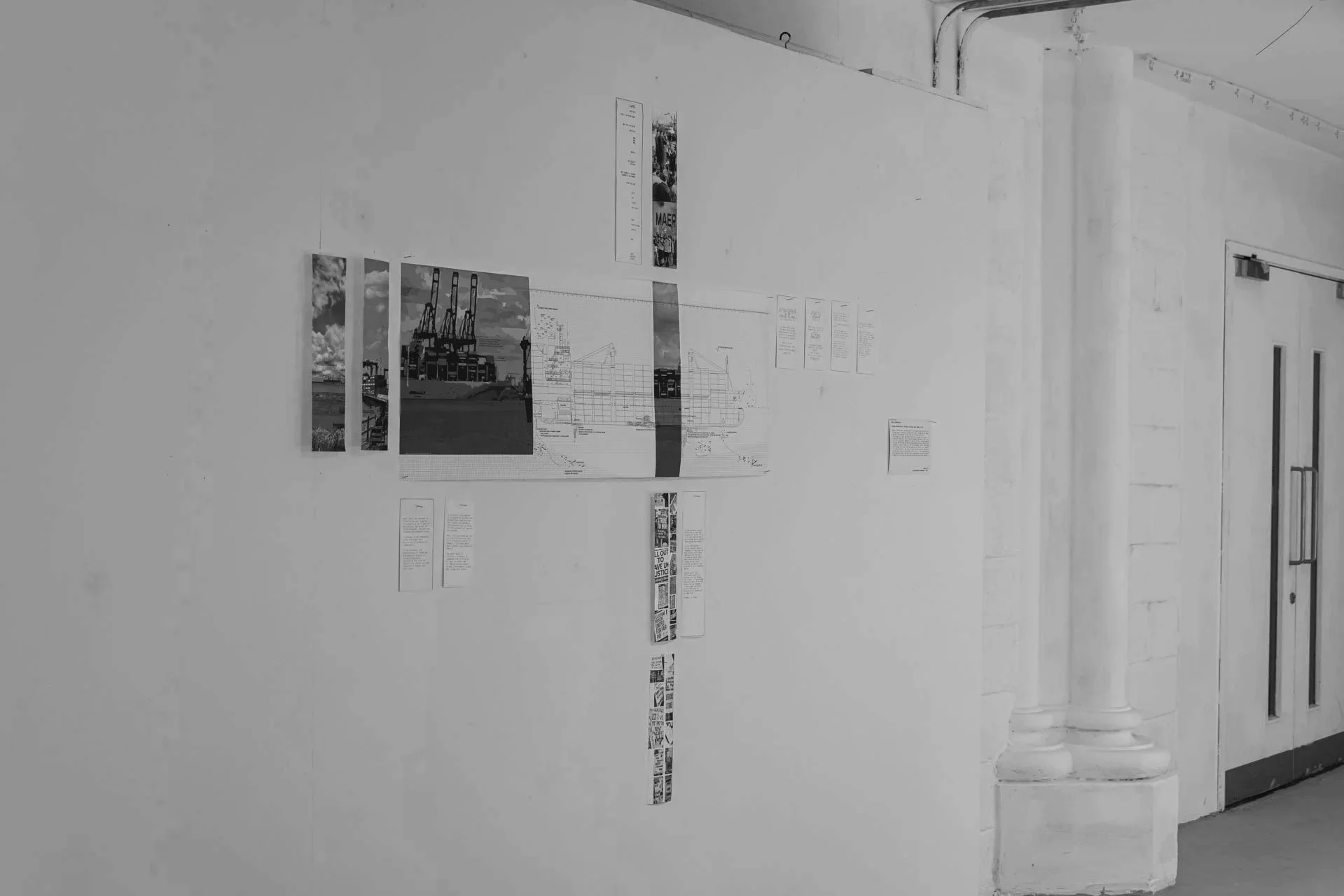
Who has the right to suspend the port?
What does it mean to demand the return of waters already damaged?
Can being-in-the-water become a practice of coexistence rather than rescue?
How do human and more-than-human entanglements challenge ownership over maritime space?
How might we become interpreters—rather than speakers—for more-than-human agencies?
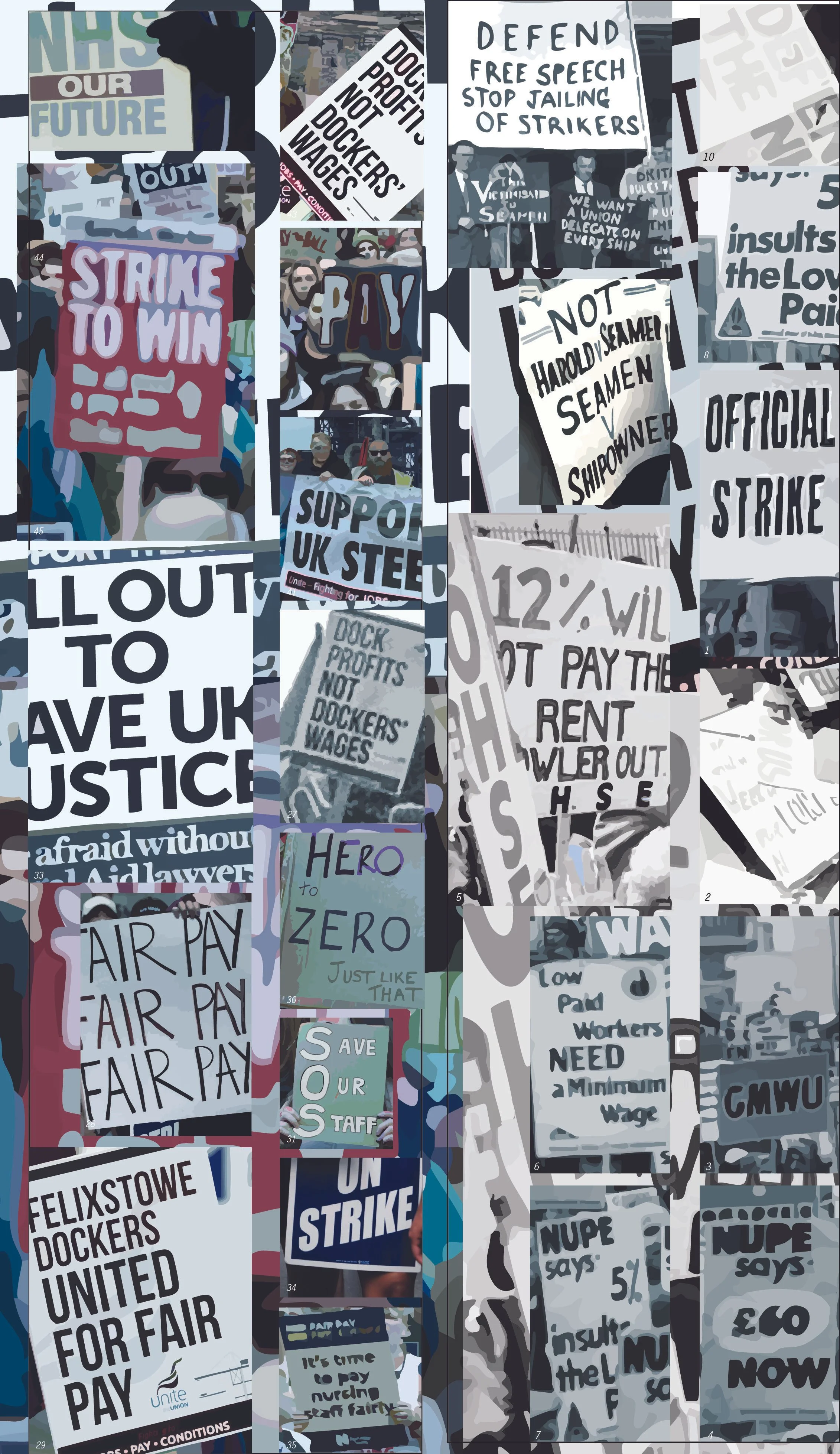
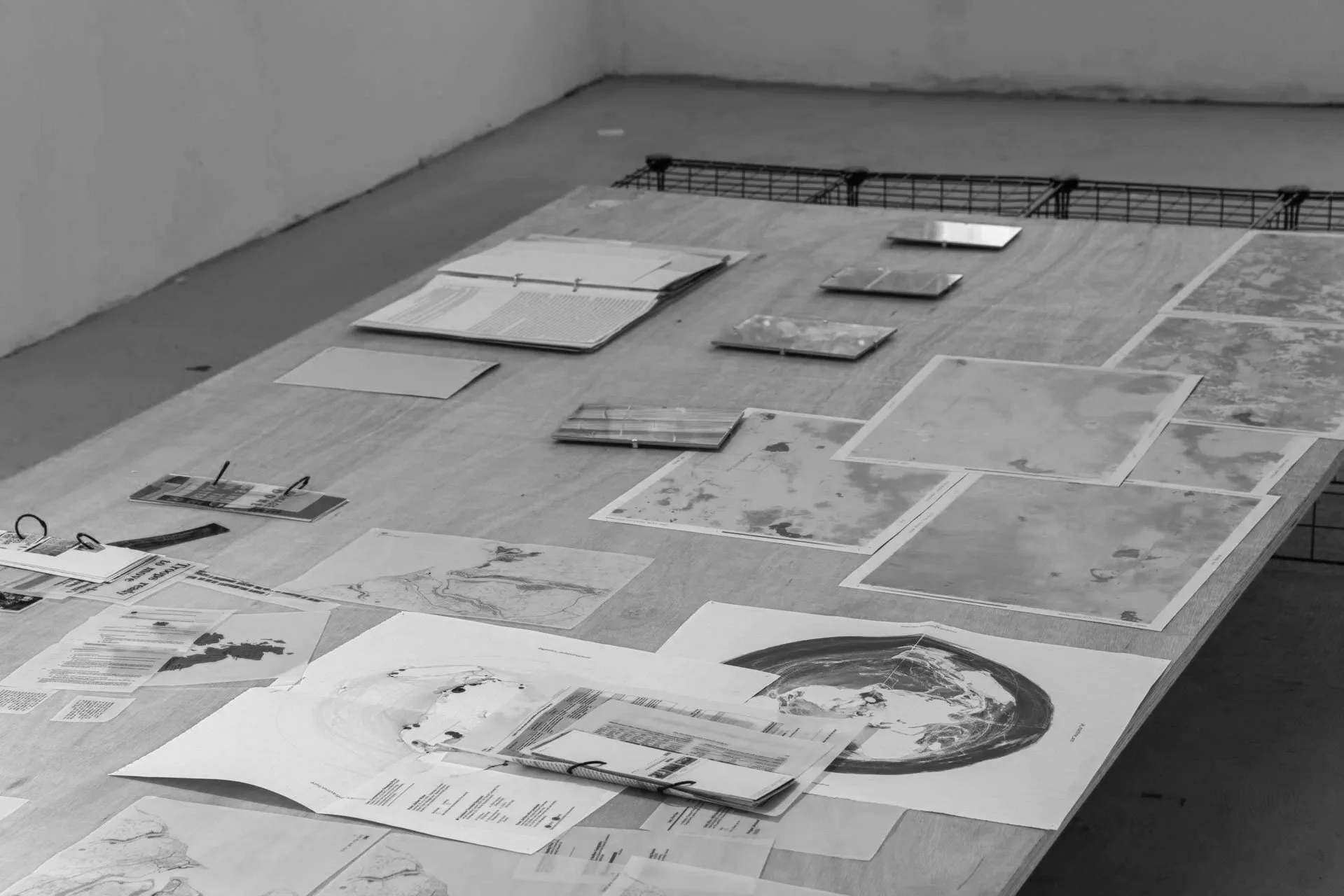
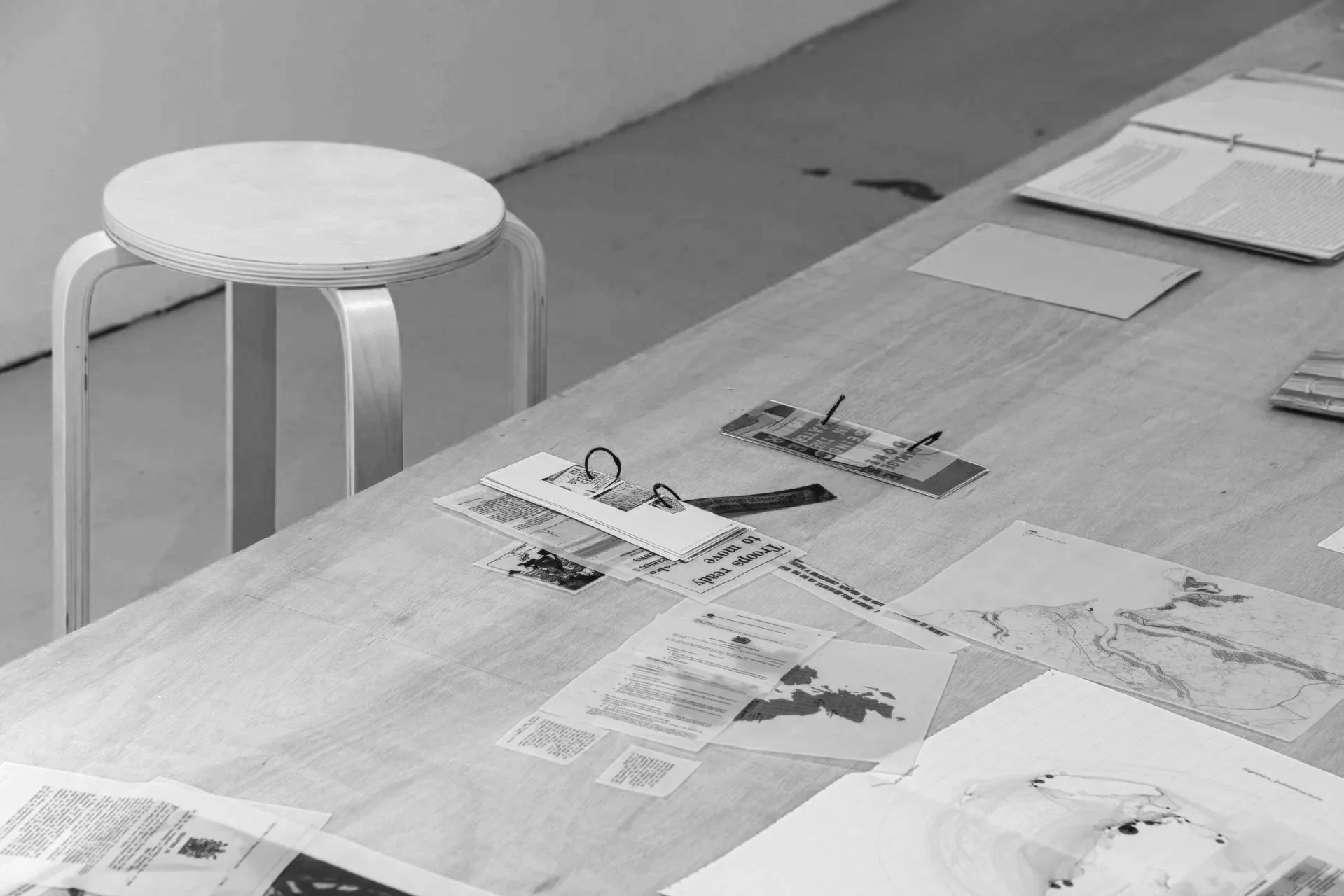
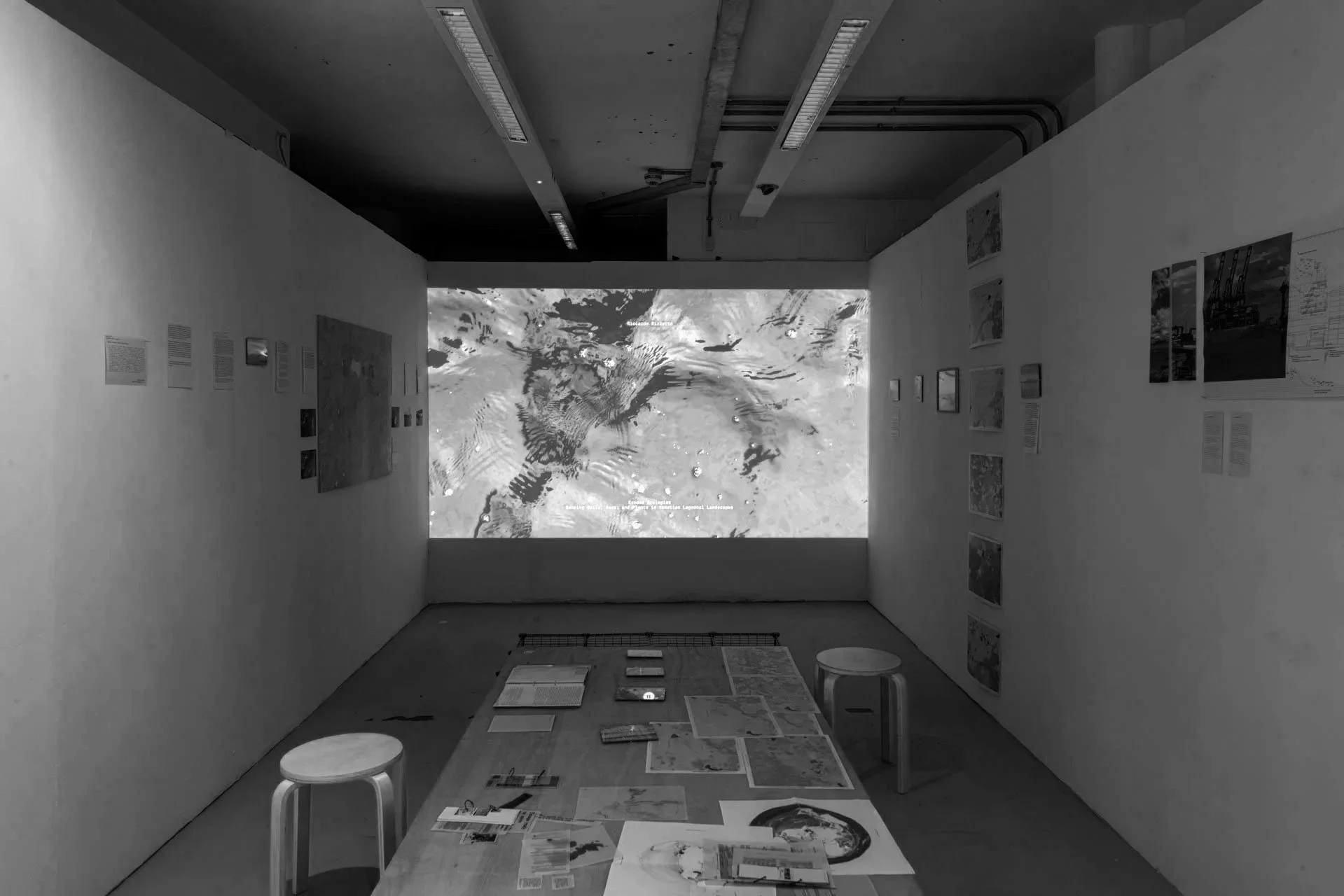
As an evolving research installation, Being-in-the-Water brings together field observations, critical mapping, archival documents, and spatial experiments produced throughout the research. At its centre, a large research table gathers thematic booklets of the sea, the port, the labour protests, archival materials, and a series of maps tracing the evolution of the UK's largest container port, global shipping routes, maritime infrastructures, and labour struggles. A suspended image on the wall of an anchored container vessel marks a moment of interruption. The vessel becomes a witness to waiting—revealing how suspension exposes uneven relations between labour, capital, environmental change, and maritime governance.
INTERFERENCES: WATER
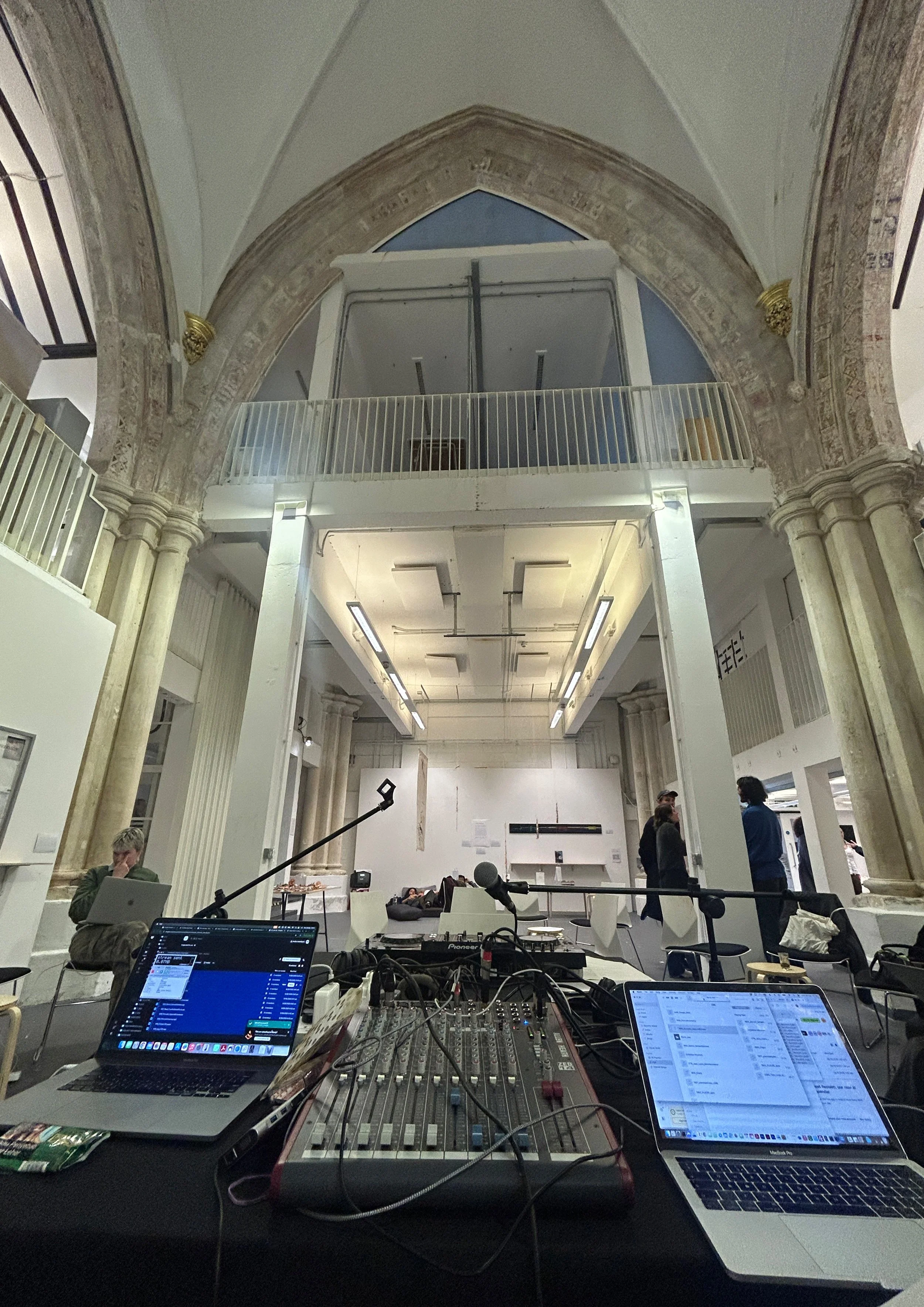
Live broadcast from/ St James' Hatcham Church
2025
institution/ Montez Press Radio
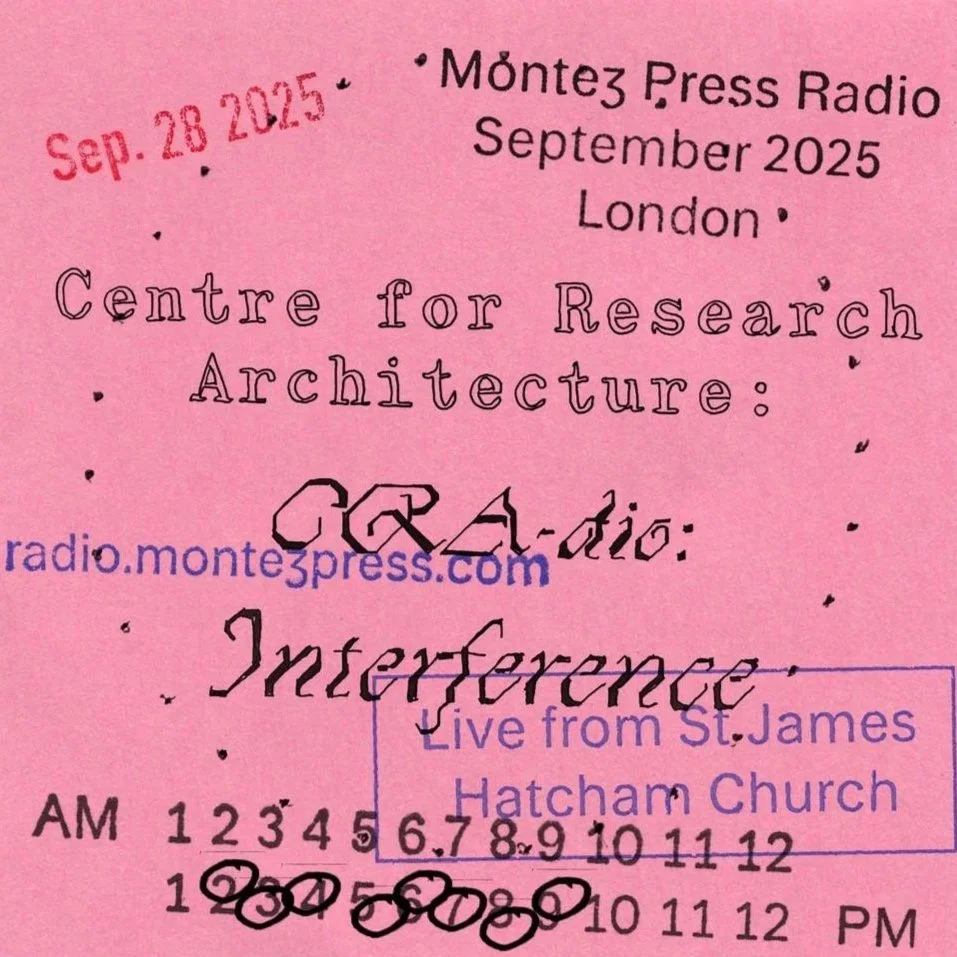
Four Exhibits of Ports is a sound lecture developed as part of my ongoing research project, Maritime Commons, which investigates ports as hybrid environments where ecological processes, logistics, labour, and political struggles continuously intersect. Bringing together field recordings, hydrophone recordings, archival material, and spoken narration, the work approaches listening as a method for reading maritime infrastructures beyond their visual representations.
Grounded in Astrida Neimanis' concept of Bodies of Water, the project understands water as a shared material medium through which human and more-than-human bodies remain fundamentally interconnected. Maritime Commons considers ports as relational environments where ecological processes, industrial operations, labour histories, pollution, and collective memory are continuously co-produced. Listening becomes a way of tracing these entanglements and making audible the infrastructures that often remain unseen.
Structured as four interconnected sonic exhibits, the piece moves across air, the shoreline, and underwater environments, weaving together industrial soundscapes, coastal ecologies, dock labour, and moments of silence. I constructs a polyphonic listening experience that explores how logistics, environmental transformation, and social struggles resonate through maritime landscapes.
THINGS I LEARNED FROM TIDAL FIELD RECORDING
2025
institution/ SArPe, Istanbul Technical University
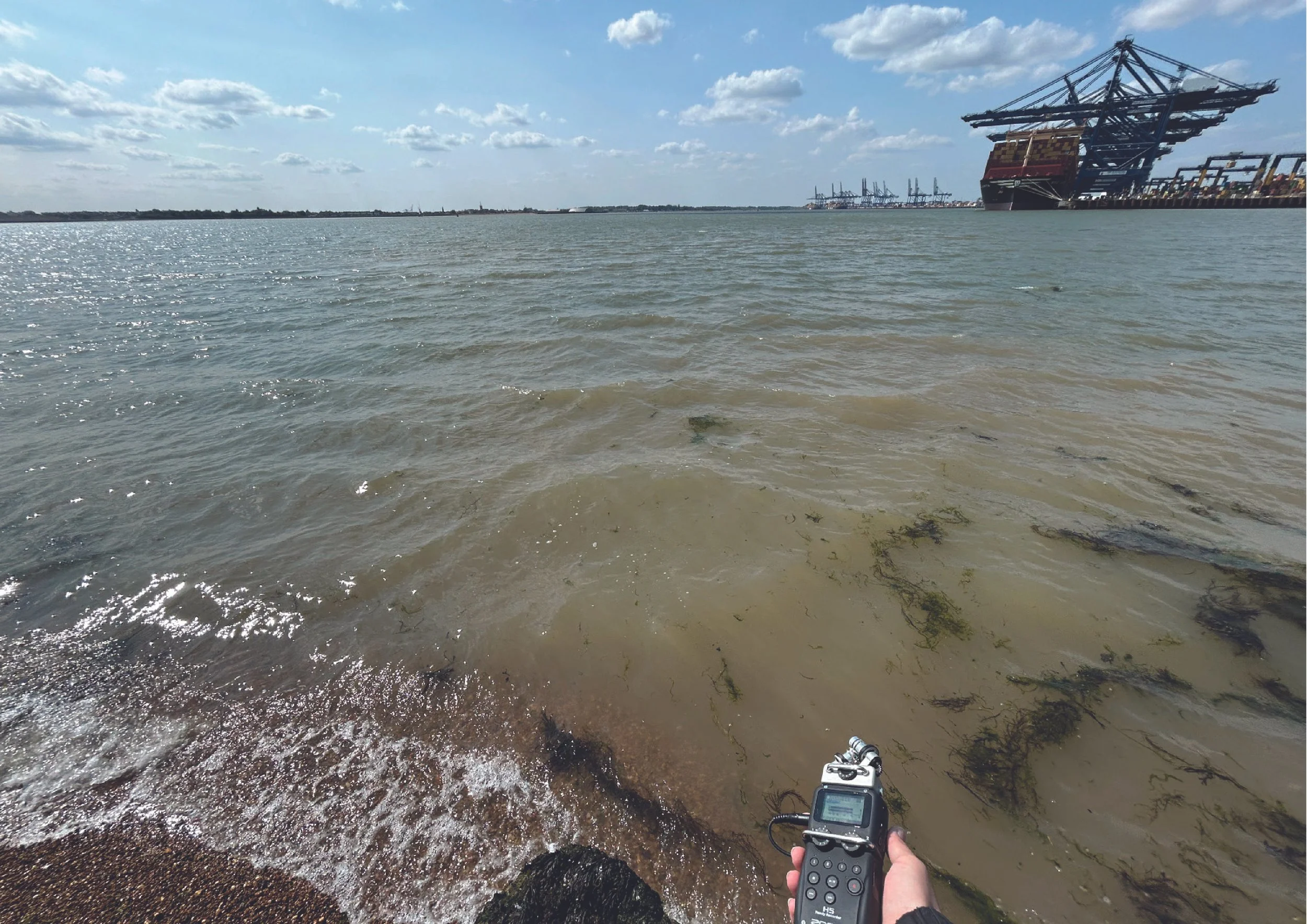
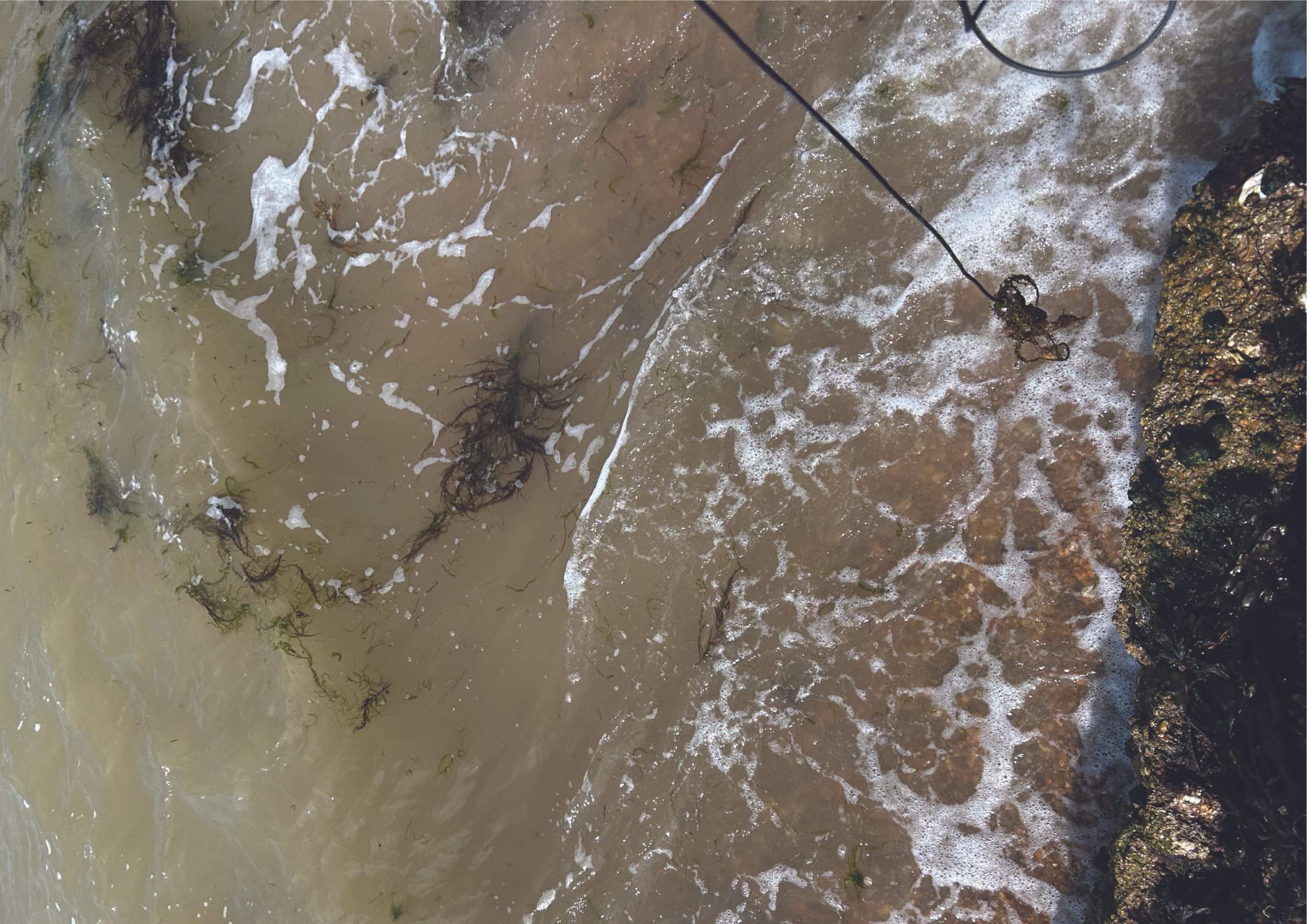
Things I Learnt From Tidal Field Recording is a looping audiovisual installation developed from field observations collected during maritime infrastructure research conducted across England. Combining video documentation with field recordings gathered along ports, and estuarine landscapes, the work explores listening as a situated method for engaging with maritime environments.
Produced as part of the ongoing research project Maritime Commons, the installation brings together fragments of tides, industrial soundscapes, shoreline atmospheres, port infrastructures, and everyday encounters. Rather than presenting these observations as documentary evidence, the work assembles them into an open-ended audiovisual landscape that invites visitors to attune to the ecological, political, and more-than-human relations embedded within coastal infrastructures.
Presented on continuous loop, it asks how architectural research can begin not by seeking definitive answers, but by cultivating attentiveness—listening to the rhythms, interruptions, and silences that shape maritime territories and the lives they sustain.
The installation was exhibited as part of Situated Architectural Pedagogies of Co-making/-Becoming(SArPe) at ITU Taşkışla, Istanbul, in September 2025. Organised by Delft University of Technology, Istanbul Technical University, the University of Málaga, and the University of Pavia, the exhibition accompanied the publication of the conference proceedings.
INFRA-ORDINARY POLITICS IN THE AVOCADO BELT
2024
with/ Andrés Ruiz, Bernal Pérez, Claire Grant, Fernanda Seoane, Florence To, Hana Soule, Iker Luna, Lene Tassin, Ravza Kabaktepe, Riccardo Rizzetto, Tedros Belay
exhibition/ Food Sovereignty Live Project
institution/ Centre for Research Architecture
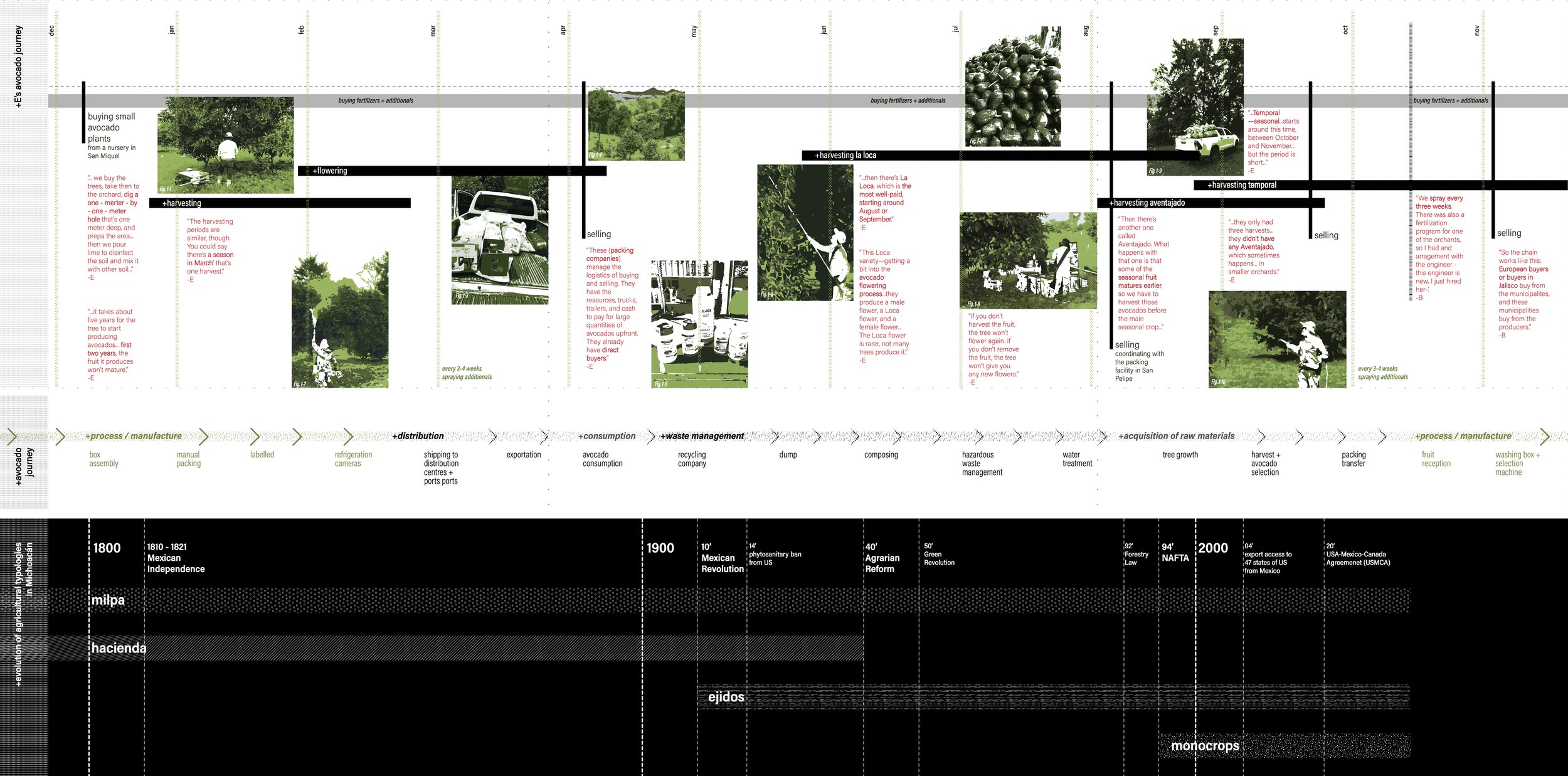
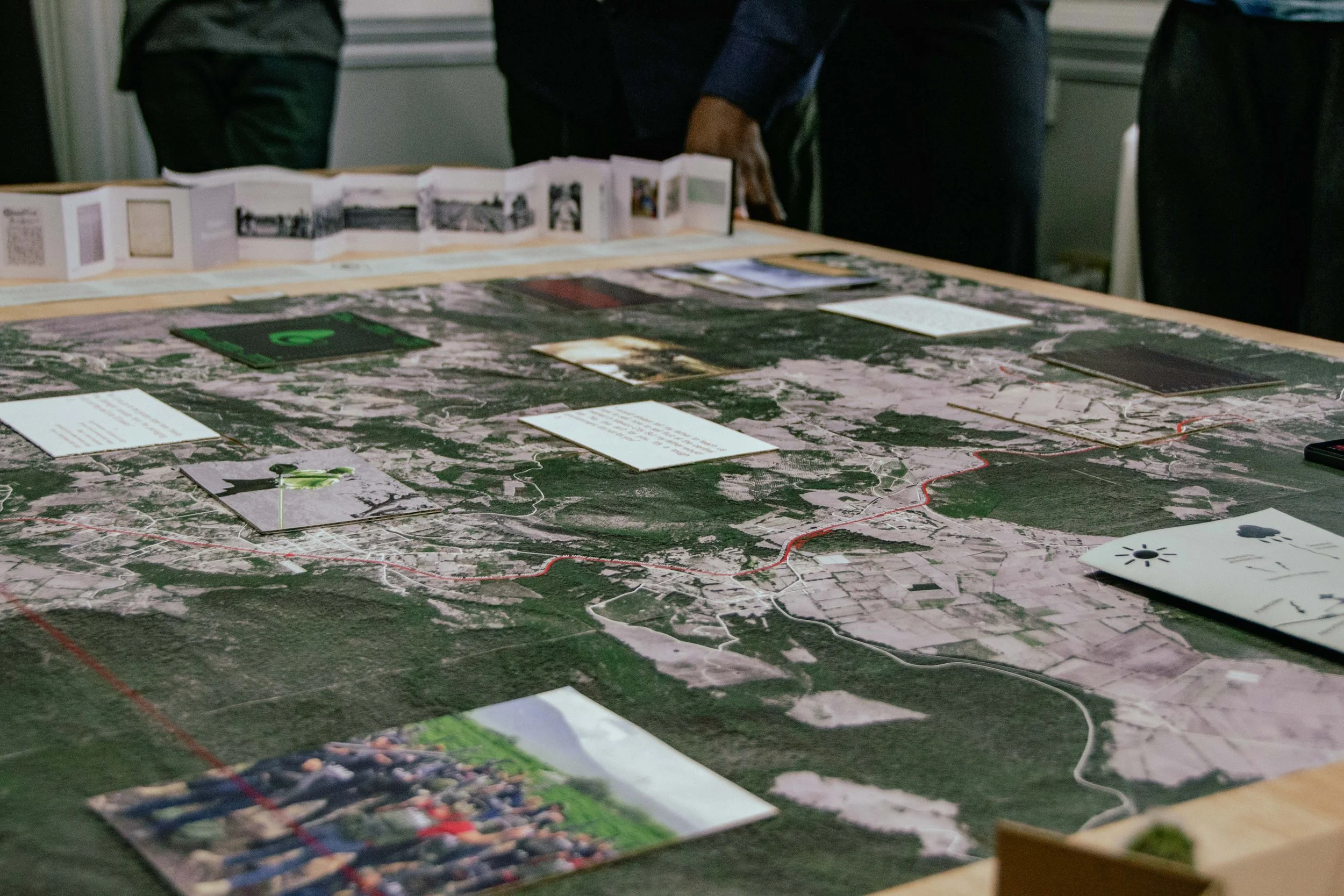
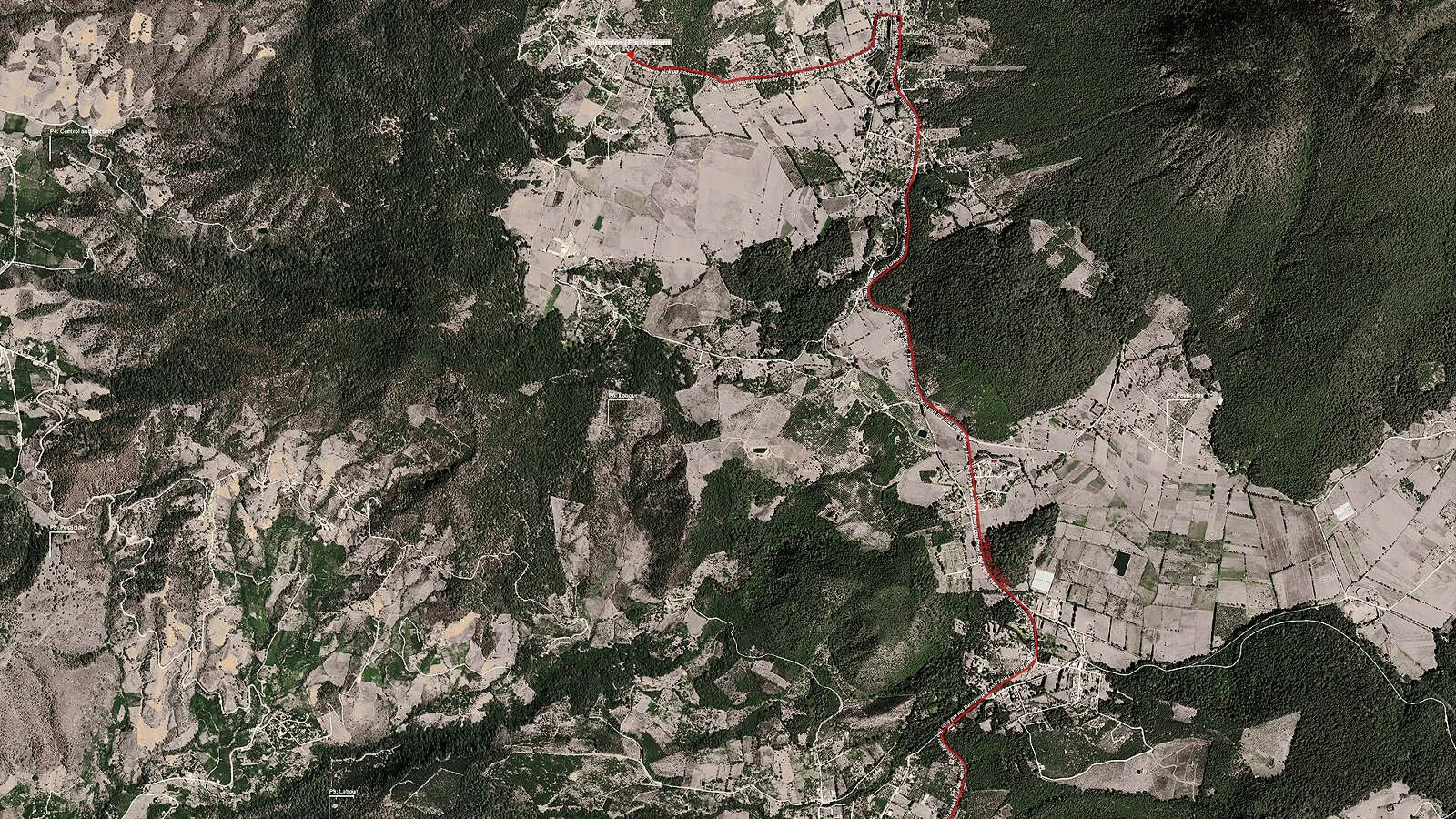
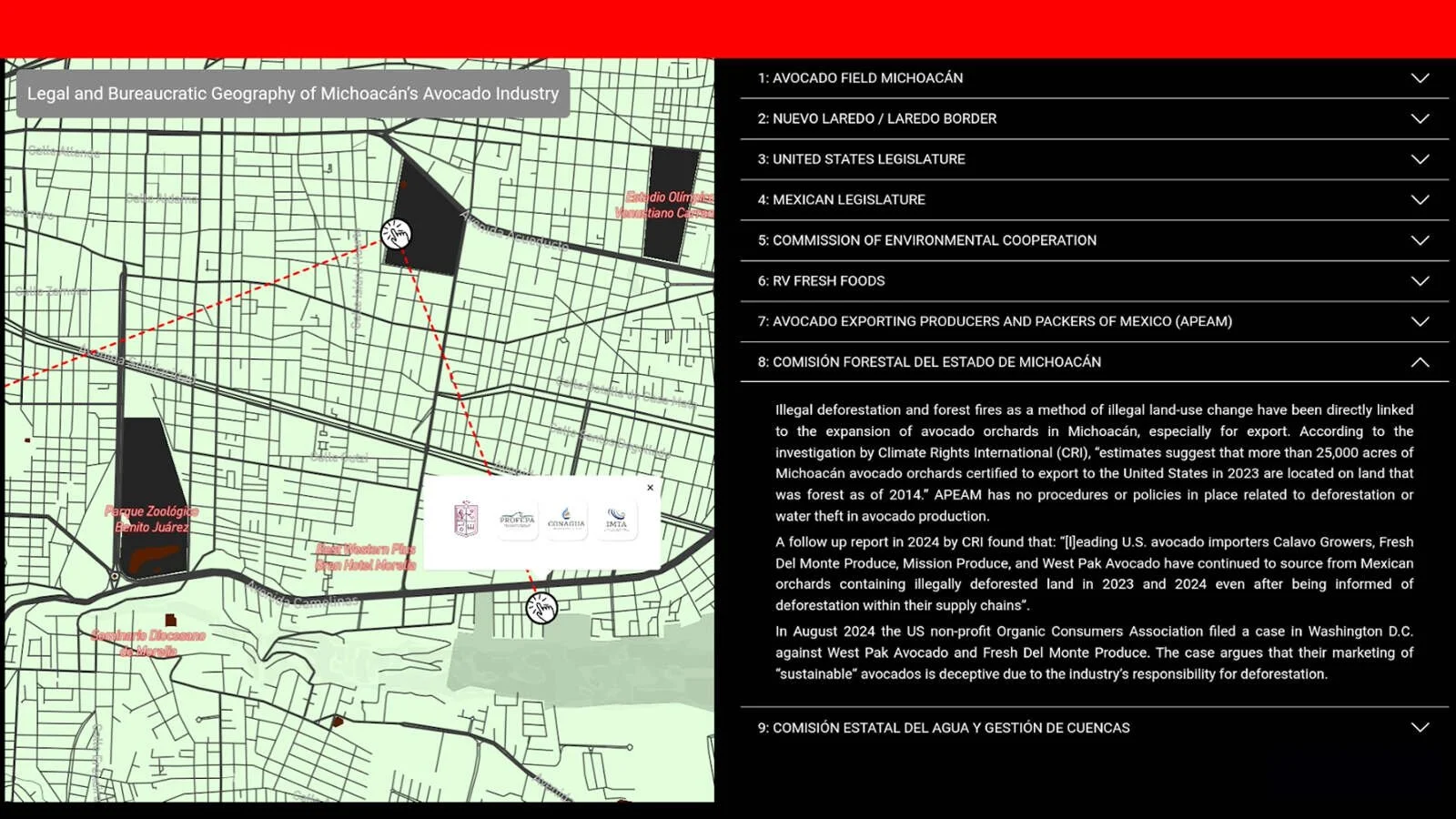
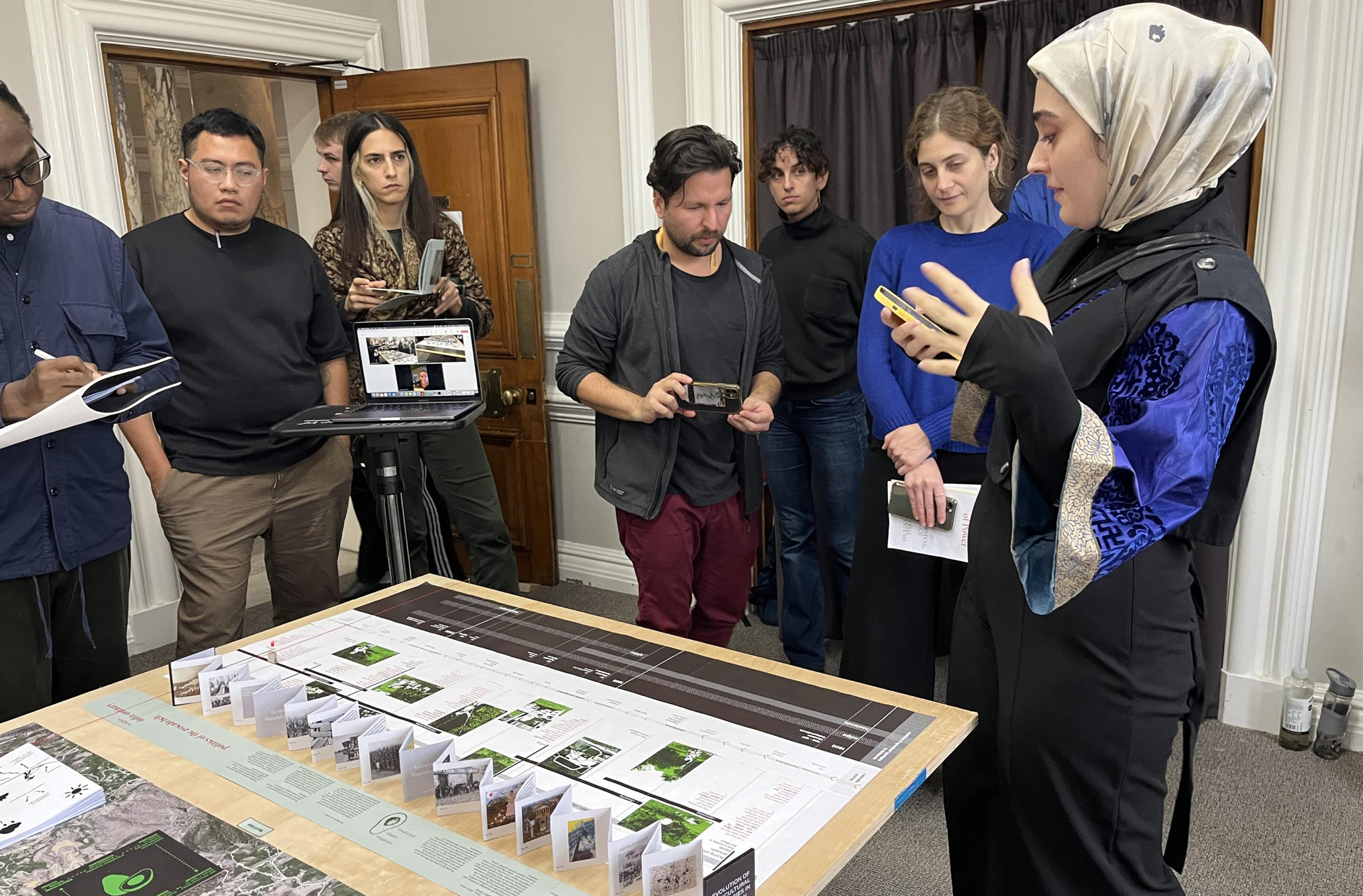
On October 14, 2024... A WhatsApp voice message recounted yet another act of harassment by a group of sicarios. It was witnessed by E, an avocado producer from Zitácuaro, Michoacán—on the eastern side of the avocado belt, the principal region of avocado production worldwide—on his ordinary route to purchase fertiliser in Aputzio. In his disconsolate yet calm tone, E expressed an urgent plea for attention to the normalisation of violence that has gripped the geographies of the avocado belt. The area, marked by the occupation of organised crime and its affiliations with the state, reveals a complex web of power dynamics. The research attempts to trace these dynamics through the lens of evolving infrastructures—from traditional milpa farming to the intensive monocultures of avocado cultivation.
Moreover, it explores how the aesthetics and politics of control intersect with environmental degradation, labour exploitation, and supply chains dominated by bureaucracy and international fertilisers, pesticides, and their impacts on local living conditions reflect broader ecological and human concerns, casting a spotlight on the far-reaching consequences of these power structures.
As Georges Perec pointed out in The Infra-Ordinary, “Newspapers talk about everything except everyday life”, the arising question is: When will these infra-ordinary occurrences of violence, exploitation, and environmental harm cease to be overlooked and normalised and instead recognized for their over-ordinary impact?
WHO OWNS THE DESERT?
2024
institution/ Centre for Research Architecture
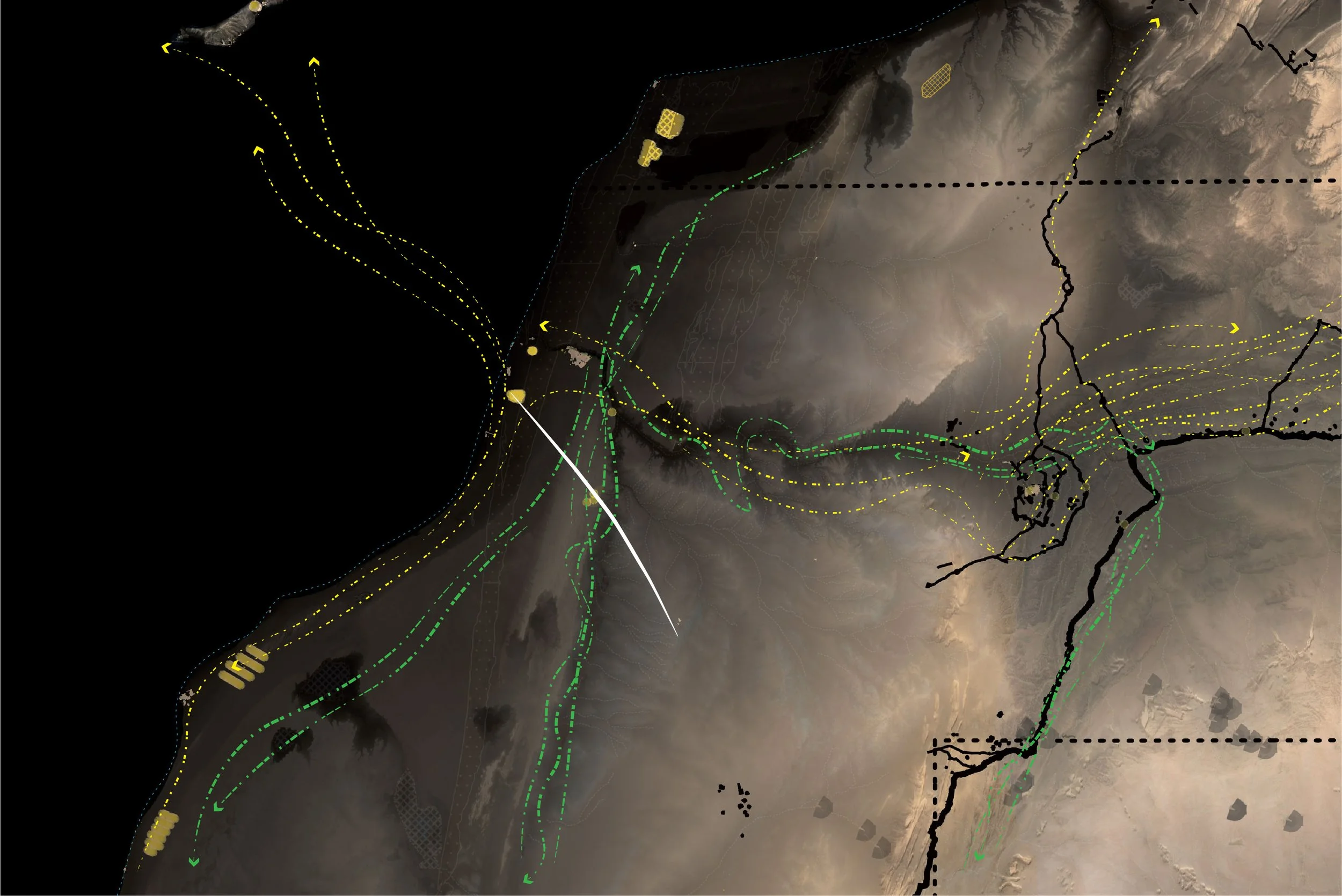
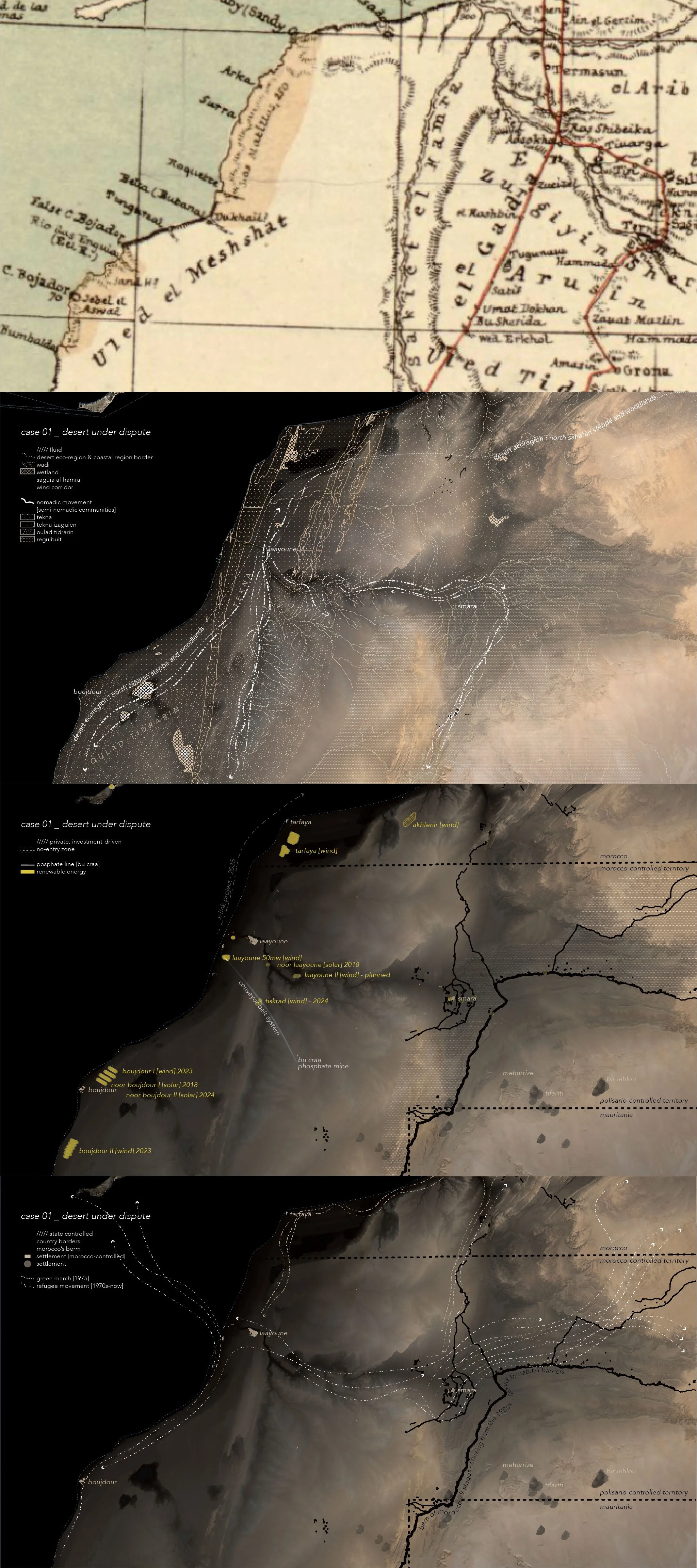
Who Owns the Desert? explores contested ownership in Western Sahara by tracing the intersections of colonial history, military infrastructure, extractive industries, and ecological systems, the project reveals how overlapping spatial regimes continuously redefine territory, commons, and governance.
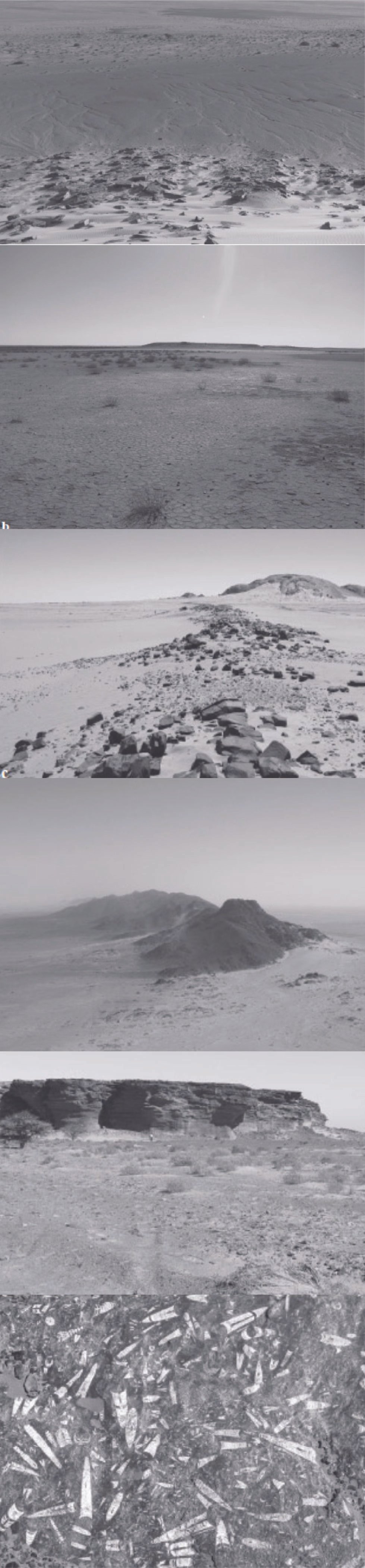
The Archaeology of Western Sahara, edited by Joanne Clarke and Nick Brooks
BARCELONA FAILURES
2022
institution/ ETSAB
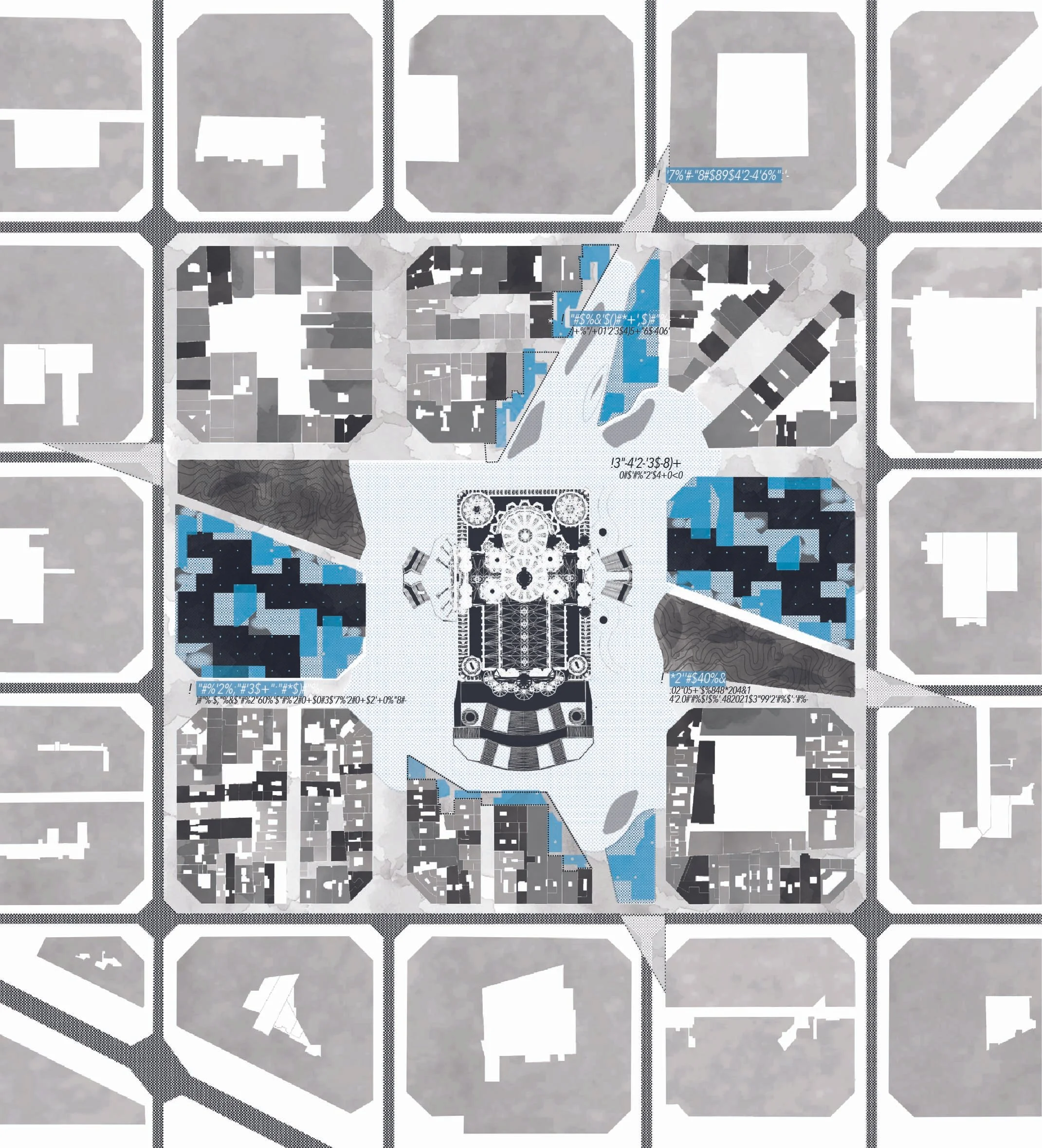
Part of a wider urban design research project within Barcelona's Cerdà grid, this work explored a series of speculative interventions addressing housing shortages, limited green space, and the rigidity of the existing urban fabric.
Rather than proposing a single masterplan, the project tested multiple scenarios—including a reinterpretation of Antoni Gaudí’s unrealised proposal for La Sagrada Família and alternative experiments. Together, these interventions explored new relationships between housing, landscape, mobility, and public life.
THE JUST CITY
2023
institution/ TU Delft
with/ Danny Yang, Laura Mateffy, Harini Sivakumar, Gabriel Ramos
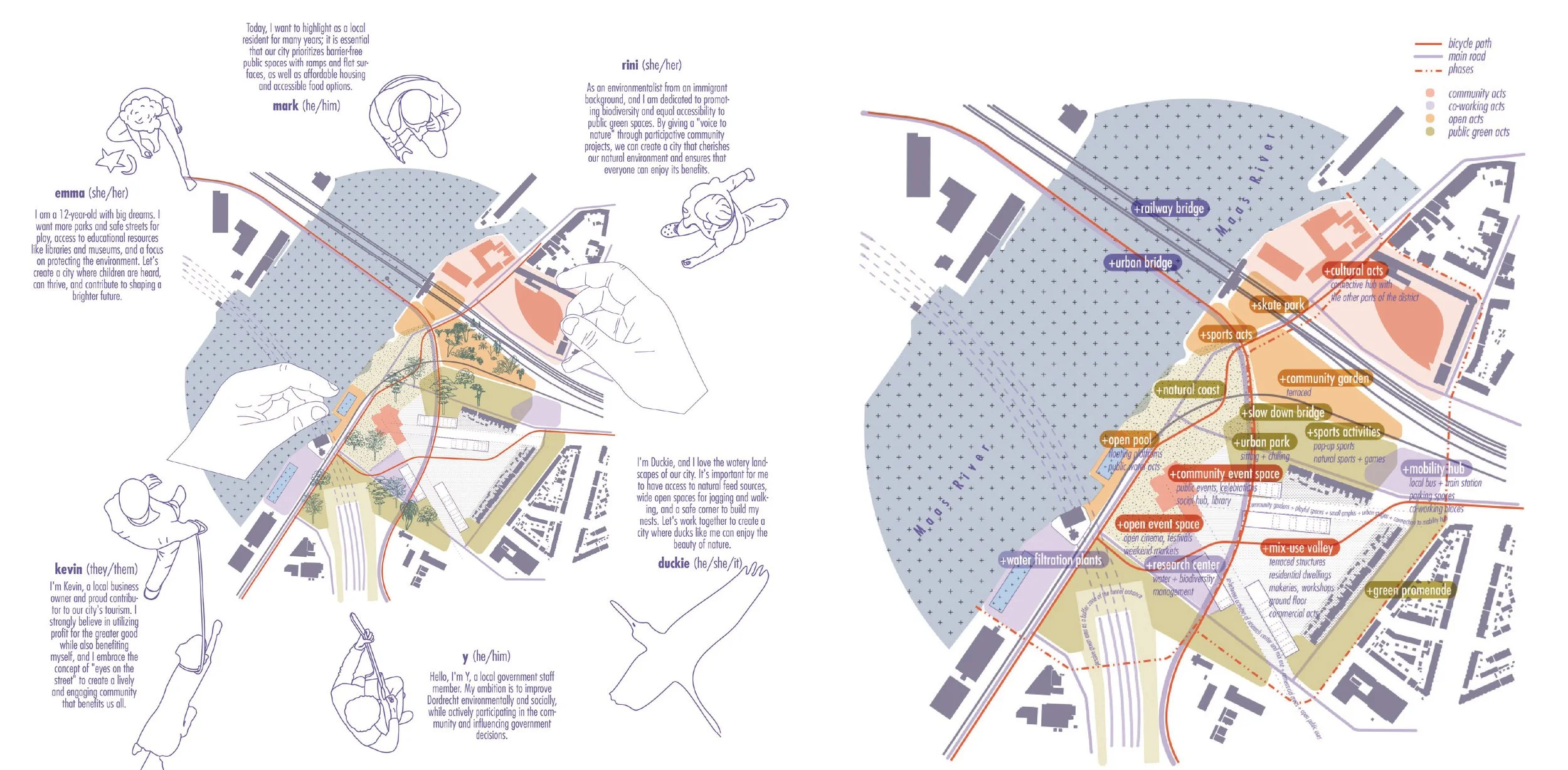
Developed during the TU Delft Summer School Planning Design for the Just City, this project investigates how participatory tools can support spatial justice within urban environments. Focusing on the city of Dordrecht, the research examines how neighbourhoods can be better connected through accessible public spaces while prioritizing biodiversity and collective well-being.
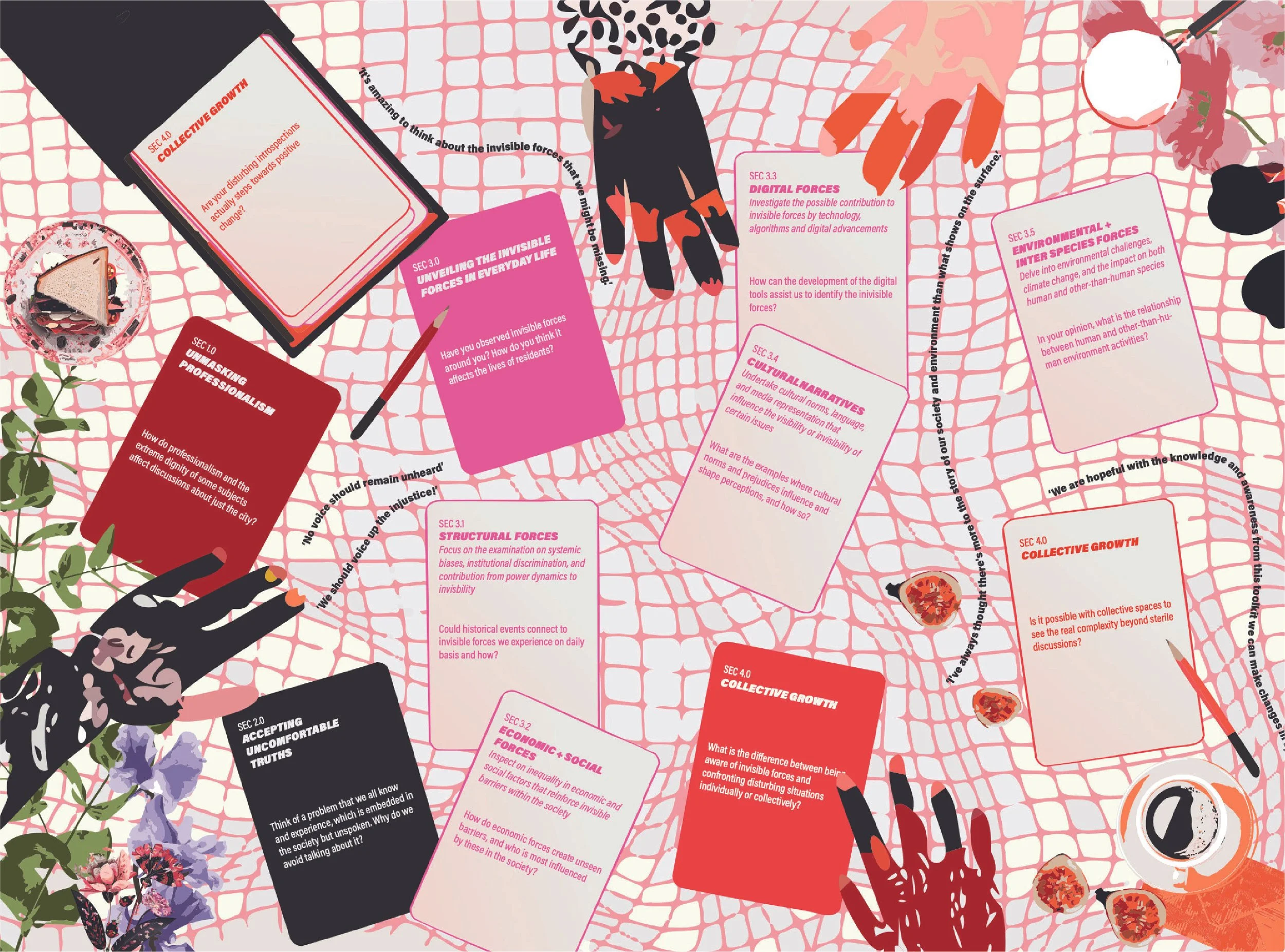
The project proposes a reflective framework titled Collective Introspection Toolkit, designed to facilitate dialogue between communities, planners, and designers. Through workshops, mapping exercises, and speculative scenarios, the toolkit encourages participants to critically examine spatial inequalities and imagine alternative futures.
Together, the toolkit and the essay investigate how emotional, spatial, and political practices of dissent continue to reshape the contemporary city.